Wednesday, November 27, 2013

Happy Thanksgiving

My "I'm Grateful for" list...on a sort of wordless Wednesday...
I am grateful to live in such a beautiful area!....


 For my current and past dogs....and all the people who have allowed me to get to know their dogs, and help them in one way or another...


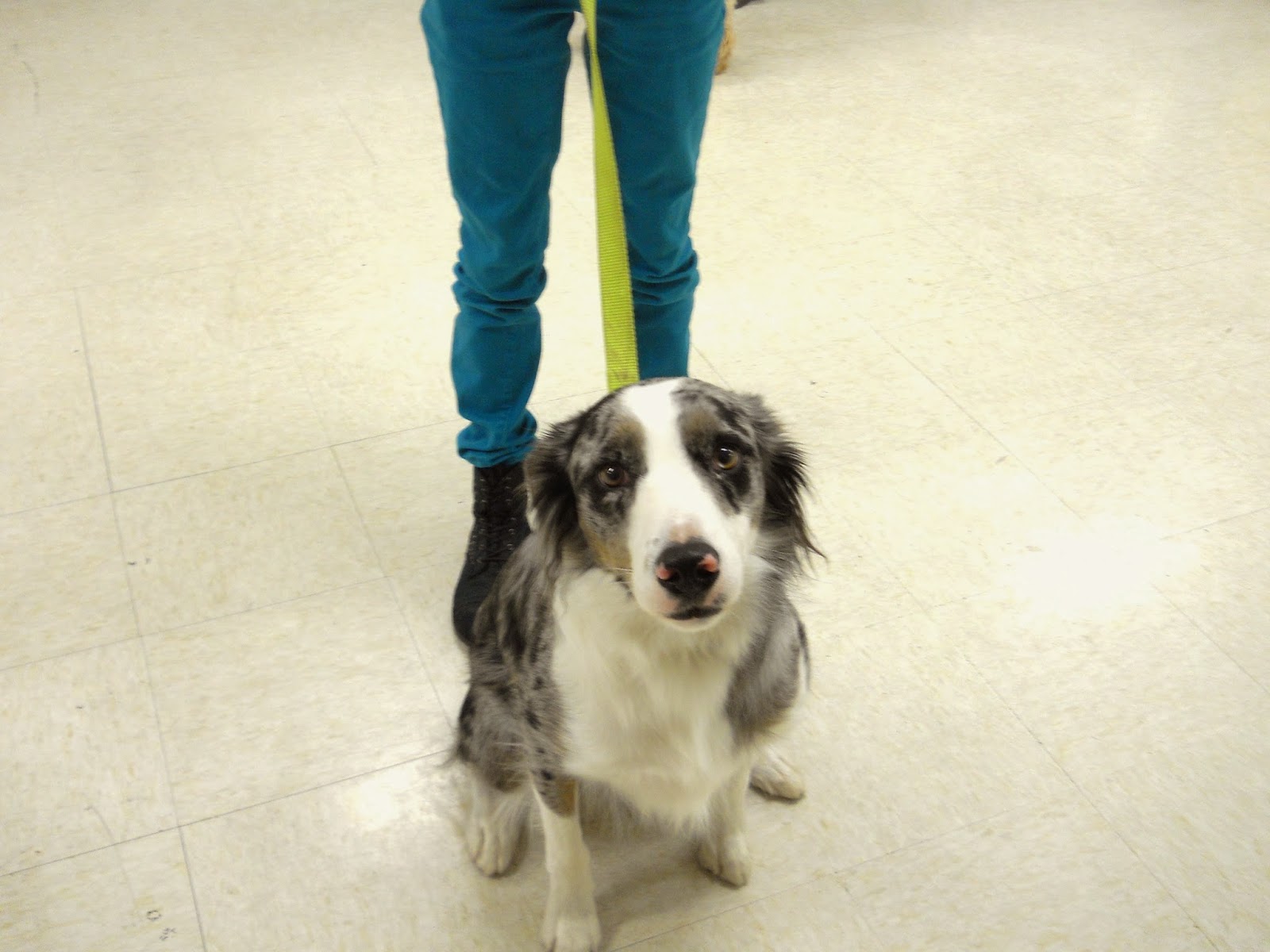
 For the places that allow me to train in their facilities such as The Pets Stop Inn,
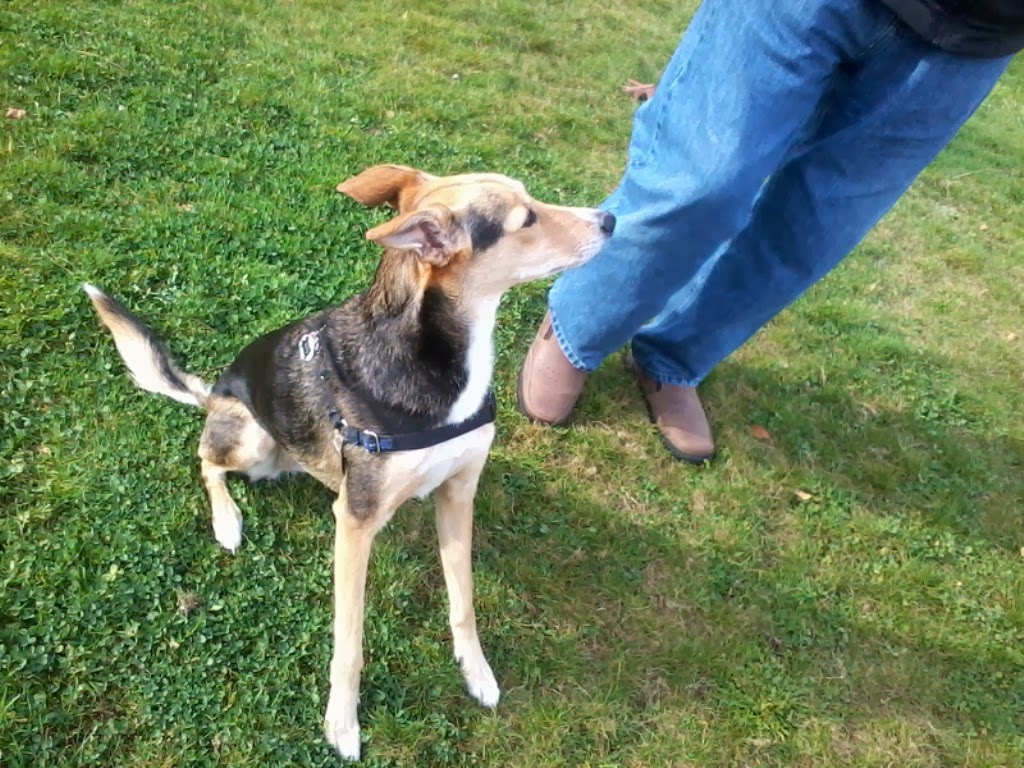
 and the Chehalem Park and Rec.


The dogs themselves and their goofy antics!

For my wonderful family and the bond we have together!


Happy Thanksgiving from all of us here to all of you out there! Feel free to leave what you are thankful for in the comment section below! 


Thursday, November 21, 2013

What to Expect When Your Expecting, With A Dog

So what's cuter than a baby and a dog?  Not much really.  It's great when they get along just fine from the get go.  The problem is that is not always the case.  Especially if you had the dog first.


I have had this question a few times, and it always goes something like this: "We just had a new baby and the dog is acting like he/she wants to bite it, or is growling at it.  We are not sure what to do, can you help?"

Why do dogs not always seem to share our overwhelming joy in the new addition? I have to say, for many, many reasons.
First of all, a lot of the time your dog has had your undivided attention, and now he doesn't.

Second, babies make a lot of unexpected loud noises and disrupt everyday life, as they knew it.  You had at least 7 months to mentally prepare yourself (most of the time), and you still struggle with it.  Expecting your dog to take to it all without a hitch is like expecting you to welcome the burglar in your house to becoming a roommate.

Thirdly babies smell different, dogs don't see them as small humans, they see them as a strange alien animal they haven't seen before.  They move in jerky motions, and jerky stiff, motions to dogs mean that the animal giving the signals are feeling aggressive.

Given that information, put yourself in their shoes.  What would you do if an alien burglar decided to make himself at home in your house?  What if your spouse didn't seem to think there was anything wrong with it?  Would you feel the need to protect everyone in the house from it, or at least yourself?

Now, how to help your dog understand, or at least feel more comfortable with this new strange addition.  If you have yet to have your new bundle of joy arrive, find a place that you can bring your dog that you know has babies.  Maybe have a friend or relative come around with theirs.  As your dog comes around just for checking things out, click and treat.  The goal here is to make your dog think that these weird alien things are cool treat dispensers.

If you have already brought the new baby home and are dealing with the fall out, please keep the dog away from the baby at first.  Bring out some of the babies clothes or blanket that the baby has been wrapped up in. Click for investigating the clothes. Once you have the dog happily sitting when you bring out baby smelling items, then you can move on to bringing out the baby, wrapped up in a blanket that your dog is used to smelling.  At first you are going to want to stand while holding the baby out of reach, while having someone else click and treat your dog for good behavior while the baby is out.  You can gradually lower the baby as long as the dog remains happy and does not close his mouth or freeze.  If you see any of those behaviors please remove the baby or stand up so the dog becomes comfortable again.  It will take every dog their own pace at learning to accept a strange new member of the family.  Don't rush them.  Ever.  That will only be putting the baby in harms way.

Tips for toddlers.  Please don't allow your toddler to pull lips, poke eyes, or bounce on your dog.  While your dog may tolerate this behavior for the time being, you never know when the time will come that your dog will decide that it is done being tolerable.  Teach your children from an early age to treat the furry members of the family with respect.  Your dog may tolerate such behavior, but other dogs may not.  So when visiting other dogs that will only put your child at risk.

I love seeing well adjusted furry and non furry siblings playing together.  I just don't want to hear sad stories of families having to rehome, or worse, having to put their dog down because it bit the baby.  Remember there is more at stake here than just a little nip.  Lives really are on the line.

Monday, November 11, 2013

A Dog Whisperer

What does the term "Dog Whisperer" mean to you?  For me it used to mean someone who could understand the body language of dogs, specifically, someone who had some unattainable attribute that gave them Dr. Doolittle powers.  That's what I used to think, till I started having clients call me one.
 Now I am not simply trying to toot my own horn here.  At first I politely denied it, still thinking that was a title that was meant for someone else, not me.  But after seeing what other trainers were doing who called themselves a dog whisperer, I decided that I should stop declining the title I was being given, lest some of these people started to believe in the other "whisperer's" less effective, and dangerous methods.

Now let me tell you something else.  If I can be a "dog whisperer," so can you.  Most people say that and believe the same thing I did.  It's an unattainable trait that is only granted to a few special people, which they happen to not be.  That's where you are wrong.  All it takes, if you are really interested, is a detailed observation, knowledge, and more observation.

For me it all started years ago, way back when I was 17 or so.  I had a horse, and I read a book that changed my outlook on my relationship with animals.  Around that time was when the book, by Monty Roberts "The Man Who Listens to Horses," came out.  I was given that for Christmas, and I devoured that book in days.  I then raced up to the stalls to try out some of what Monty Roberts had described in his book.  This was my horse, Stacy.  I rode bareback most of the time, and I spent as much time as I possibly could up there for those few short years before life, and it's many twists and turns happened.  What I learned up there though has stuck with me all these years.  I learned that I could have a real relationship with animals, I learned that we could even communicate.  Horses are wonderful that way.  They are so sensitive to their rider's mind.  If I saw a log on one of the trails we would ride on, and I just stared at it, I learned that Stacy would spook, or at least take the long way around that log.  She was picking up on what I was concentrating on.  I could do that with anything, a rock, or a clump of grass.  She was a wonderful teacher.  So forgiving too.  It was here though, that I learned the art of observation.  I watched how the horses interacted with each other, I watched how they interacted with different people.  I watched how they interacted around me.  I discovered that if I took the time to learn why they acted a particular way, it paid off in the long run.


Animals who lack a large vocal language rely on their every movement to relay information to those around them.  An ear flick, a raised leg, even a lip movement are sentences to those who know understand.  We are so lucky to live in a day and age where our own communication can be relayed around the world in a blink of an eye!  It might take a bit of digging, but you can find others out there with years more experience at reading animal body language than you have.  Then comes the fun part.  This is where you need to do your own observation step again.  Apply what you have learned and from others and their research and observation, then see if it holds true in your situations and circumstances.  Most people who have done degrees, or spent years learning animal body language will not always agree on the exact meaning of all the twitches and movements of a particular animal.  So what's a person to do?  Now is where you take all that you have learned from your studying and apply it to as many situations as you can.  All the while, keep abreast of the latest studies that are constantly coming out.  It would never do to think you have learned it all and that was it.  Until we have a universal animal language guide book, we should never simply take someone at their word, if we can help it.  We need to experiment with it ourselves.  However if you have hit that point, you have made it.  You too will probably get people calling you an animal whisperer, whether or not you feel qualified to be called one.

Whether it be a dog, bird, horse or cat, we all can discover the "Animal Whisperer" inside all of us, all it takes is a closer look at the world around us.

Thursday, October 31, 2013

Happy Howloween!!!! Pet Safety Tips for Halloween!

 Roxy wants to make sure that you and your fur babies don't have any unhappy events tonight! It's easy for a small dog (or cat) to slip out in between all those trick or treaters tonight.  If you are worried that might be a problem please put your dog in her crate with a chewie or stuffed Kong toy. The chewing will help reduce the stress that the constant doorbell ringing will bring on.  Another good idea is to make sure your i.d. tags on your dog are up to date just in case the worst happens and your dog does slip out.  If someone finds her they will be able to get a hold of you and the two of you will be reunited much faster.

If you don't like the idea of keeping your dog in a crate for the night, please have your dog leashed, and leash in hand for the night.  This will prevent any negative behavior from your dog from getting out of hand, as well as keeping them in the house and preventing the vanishing dog act.  Lots of kid on the sidewalks will make a skidish dog take to the road and increase the chances of your dog getting hit, so even if you are not worried about your dog running away, getting hit in front of your house is no better.

 If you have help or think you can manage it (keep you leash on your dog even with this exercise) you can click every time you have your doorbell rung.  You can have one super night where your dog is getting treats every time the bell rings, even if strangers are introduced, if you have a good treat your dog will soon learn that the strangers aren't going to do anything to him and he will start to simply look forward to the treat.  It's also a good time to work on your "Quite" and "Leave it" commands.


Good luck tonight and have a Happy Howloween!!! From Roxy and us here at Sit Spot Click!

Wednesday, October 23, 2013

Dog Jerky Recall


Okay, so here is my take on all the Jerky recalls over the past 3-4 years. DON'T feed your dog jerky. Dog nutrition 101: It may surprise you to know but a dog's kidneys don't do well with high concentrations of protein like that. If you look at the bag of your dog's food the protein percentage will be under 30%. Anything over 30% causes your dogs kidneys to work extremely hard. Now the next time you are at the store, check out any of the bags of jerky treats for your dogs. The lowest I have ever seen their protein is 65% with most being around 85%. Now if your dog has kidney issues you may or may not know it, but put them on over time, a lot of the time, and you are going to find out pretty quickly. Add all this to the fact that a lot of the time it's the small dogs who end up dying or having horrible reactions. Their owners are giving them an entire jerky strip. For a small dog that is an overly huge amount of concentrated protein. That's like you eating an entire Costco sized bag of Jerky, and most owners give their dogs these treats every day. Now imagine if you ate a Costco sized bag of jerky every day, is that something you would do to yourself without expecting some hardship to your body? When a dog eats raw meat, in those raw diets, the protein is diluted with water that makes up 60% of the animal's body. We are mostly water right? So are other animals. When dogs or wolves eat other animals they are not eating mostly protein, they are eating mostly water. The protein percentage would be about the same as it is in the dog food you are currently feeding them. There has been a lot of research into how much is good for the dog and what is needed versus the tipping line of too much of a good thing is bad for you. So if you are going to feed your dog jerky, remember only a little every now and then, please don't think they "need" it or can tolerate more than that. Sure your dog might be doing fine now, but after several years how beat up do you want your dog's kidneys to look?


I don't want anyone reading this to go "oh I have been a terrible pet parent!" Very few of us lay people know or understand pet nutrition.  We all trust the dog food we have been feeding for years, to be good for our dogs, and at the very least we think we are giving them something good for them, not something that would lead to their death in a few short years.  The problem is there is so much information out there.  How is anyone supposed to sift through it all without spending several years going to vet school (and here's a little bit of info for you, your vet was not required to take any nutrition classes if he graduated sometime before the year 2005. So your vet might not even be the pet expert on your dog's nutrition).  I can tell you from my own experience that even well meaning vets are easily bought and sold on the foods and treats they recommend to you.  As a vet tec we had some wonderful paid for dinner and lunch seminars that were very fancy that fooled me.  However one time I had one of the presenters tells us flat out that their food was really no different than most of the lower grade foods, the biggest difference was that their food had more antioxidants in it.  At that I was floored.  Really?  This fancy bag of food is no better than what you would find at Walmart.  I felt completely let down by the industry I had trusted.  There are lots of foods out there that promise great things and wonderful results if you use their food. For a time I didn't think that any of the foods were really different from each other.  Then I found Nutro.  As far as foods go, this one is different in one very important way.  Not only is it all natural (which can mean a lot of things, and is used all over) but it is research based.  This means they have teams of people whose whole job is to find out what the best balance of nutrition is good for every breed, and dog size, and age.  This makes the real difference to me. Now they do share this information with the other companies, but not till after they have used it in their formulas.  I think the waiting time is a year at least.  I do not trust most dog food companies, as I have heard first had horrible experiences, as well as having some of my own. But I can tell you the name of several dog food brands that I trust, not only is their food balanced and the amounts researched properly, but the factories that they are made in hold the highest standards in the company and are cleaner than a lot of our human food processing factories.  If you need prescription food for your dog go with the Royal Canin, they have the most up to date research for your dog's food as you can get.  Nutro is their sister company(both owned by the same parent company) and is in the process of building their own dog food research facility here in the U.S.  Currently the one that is used is in Germany.  It is world renown for their accuracy and findings. 
So there you go, a little dog food nutrition 101 to help you muddle through the vast "other" information that is floating around out there! Hope this little nugget helps.

P.S. and by the way....cats need higher protein than dogs do, but they shouldn't have more than 45% protein, and should have at least 30% since they need to intake more taurine from their food, as their bodies can make it.

Tuesday, October 8, 2013

The Easiest Way to Train Your Dog

I hear this a lot.  "What is the best way, or what way do you recommend to train your dog?" I hear this a lot because I train dogs for a living, well dog, and their owners.  What people really seem to be asking is, "what is the fastest and easiest way I can get my dog to do what I want."  The honest truth is there is no "fast track" to training.  That's like expecting your child to be able to be doing calculus by the time they are done with Kindergarten.  Every once in a while you might just find a child who can, so I am not saying it's impossible...just not what to expect.

There are, however, ways that are easier and better than others.  There's a lot of information out there about dogs, so much so that I am not surprised at the amount of confusion, and disagreement that occurs.  Back when I attended my first dog training class, the rage and the "best" method of the day was the choke chain, which has now escalated into the pinch collar.  I hated it, but I thought I was doing the best thing for me and my dog.  I was only thirteen or fourteen.  If I had only known then what I know now.
This was Barney.  He was a sweet, old dog who was subjected to all kinds of bad behavior on the part of his unknowing owners.  He put up with so much from us, and we often times found that we were at our wits end with him.  We loved this dog, we all did, but because of our lack of understanding there was a lot both sides had to "put up with."

Fast forward almost 20 years to now.....
This is Miss Roxy.  Once again I can say even with all my past experience I am still constantly learning.  However because of what I do know she is quite the spoiled dog.  She was rescued at five  months of age and I had every intention of training her and then rehoming her. However she had more issues than most dogs, and in the end I didn't want to see her end up in a shelter because someone else didn't understand her or understand her issues.

Now one thing I would like to stress, your dog is smart.  I have not yet met a dog who wasn't much smarter than their owners give them credit for.  For most of you (unless your dog is a working dog) your dog has one job, to learn as much about you as possible, than use that information to get what they want.  A belly rub, food, a ball thrown for them...and so on.
Your dog spends as much of it's time as possible watching you, so they can understand you.  Now don't forget we don't really speak dog very well yet, and dogs really don't speak human.  So for as smart as we all are there are bound to be miscommunications.

First things first.  What do you want a dog for?  What do you want your dog to do?  Make sure you can clearly answer those two questions.  If you can't then don't get upset with the dog because they can't read your mind and interpret it for you.  

Let me give you an example.  For most people the "Sit" command is one of the very first things taught.  Now why is that?  We all want our dogs to sit next to us, calmly.  So we have a clear idea of what we want them to do.  Normally that is one of the easiest things to teach a dog to do on command.  Firstly because we know exactly what we want the dog to do, and secondly it is something the dog does naturally all the time.  You can achieve this many different ways, I simply hold a strong smelling treat in my fingers and slant my hand from the dog's head, down towards it's rump till the dog is in the "Sit" position, then I click and the dog gets his treat.


Now what about teaching your dog how to wipe his paws on the mat before coming in the house?  Sounds like a great idea doesn't it.  Only thing is how do you teach your dog to do something like that?  That is a question I was faced with a couple of years ago.  I thought, well that seems to be something I see a lot of other dog trainers have their dogs do, so it should be fairly simple.  All I could see was the end result.  I knew what I wanted, but I didn't know how to get it.  The thing is my dog did scratch things, just not what I wanted.  In order to teach your dog anything, you need to have a plan.  Steps to teach your dog. Let me mention to, that the more you work with your dog (punishment is not working with him) the more your dog will "get it" and will be easier to train, or teach.

Remember that we don't fully speak one another's language.  How do you communicate complex ideas with someone who does not share your language?  How would  you explain to someone from a small African village that in order to make the house you live in warm or cold, you move a knob on the wall, or push a button?  Think of a dog as someone from that little African village.  You don't speak the same language, and your context for explaining things are not going to be the same.

I wanted my dog to do something completely foreign to it.  Wipe her paws before coming in the house.  To a dog it makes no sense.  First things first remember.  Come up with a clear plan. 

 Step one: (remember I use the clicker training method)
Click & treat for any scrapping motion my dog makes with her feet, anything that is close to the wiping  motion I want. (this is called capturing, it's finding something your dog is already doing and rewarding it so she wants to do it again) Say she likes to scratch at her water bowl on warm summer days, or maybe when she is trying to dig a hole. 

Step two: Add a verbal cue (or word) to the action so that I can ask for it and she will know what I mean. 

Step three: Ask for it in other places.  Now instead of only clicking and rewarding her for scratching in her bowl, now ask for it and reward it if she will do it on the mat you have in front of your door.  Be patient with this step, it's one thing to understand a cue in one context, it's not always the same thing when you try to move it.  (Think of the Karate Kid and Wax on Wax off)

Step four: Always ask for the paw wipe when she comes in to make it a new habit.  (and remember it takes us thirty days to make a habit, give your dog the same chance)

Ok so now you understand how to teach your dog new behavior, but what about stopping "bad" behavior such as jumping up on you or your guests?  First thing here to do is to understand why your dog is doing what he is doing.  This is where, knowing why you want a dog, comes in handy.  You don't get a bird if you don't like bird songs, or feathers.  You don't get a horse if you don't like to ride, so it only makes sense to understand what it is about a dog that makes you want one.  Next to understanding that is understanding what a dog is, and why it does what it does.  One reason a dog jumps up on people is to lick their faces.  Dogs are hard wired to do this, it is instinct. In their language it means they are happy to see you home, it can also mean they would like food, or time to play.  Just because it is instinctive for them to do this does not mean you can not teach them a different way of saying the same thing.  By ignoring your dog's bad behavior, or leaving when jumping starts that will send the message that you do not like it and all fun time will stop if that happens.  
You also need to then reinforce what you do want.  If you can get your dog to sit for you make sure you praise, pet, and or treat when he does this.  If you are consistent about this you will soon find that your dog is no longer jumping up to get your attention, but sitting nicely by your feet.  Don't forget to praise and reward (either with food or play time) behavior you want repeated.  
One of our biggest mistakes we make when trying to teach our dog good behavior is forgetting to reward the good things our dogs are doing.  If your dog does not jump on you, or knock over the toddler in the yard, make sure you let him know that that is the correct way of going about greeting people.  They take their cues from us, but sometimes there are miscommunications. They may take your waving your arms as a way of saying, "Yay, I'm glad to see you too!"  Instead of your meaning "No, get off my best pants!"  The earliest you can teach these things the better behaved your dog will be.  Don't want your dog to bite your hand when you are playing?  Make sure you have a tug toy that he can bite an offer than when he goes for your fingers.

So in a nutshell, the fastest, and easiest way to train your dog is being aware of what your dog is doing, redirect behavior that you don't want, and praise the behavior you do want.  Sounds easy?  Don't be fooled, it takes time, patience, and more perseverance.  But don't fret, as I said before, the more you work with your dog the better you will both understand each other, and the easier it becomes. It will be worth it in the long run. Happy Training! 


Thursday, October 3, 2013

Newberg's Doggy Play Day!!!

 You read right! Newberg get's it's very own Doggy Play Day!!! Come and let your dogs play, they can stay for an hour, or all day (from 10 am to 5 pm).  When you take them home you will have one tired pup!

When: Thursday Oct. 17th
Time: 10 am- 5 pm
Cost: 1-2 hours $2.00
         3 hours and up $5.00
Come let your dog run around and play while you enjoy a break, you can stay and play with him, or head out and get some errands done while I make sure everyone is happy.

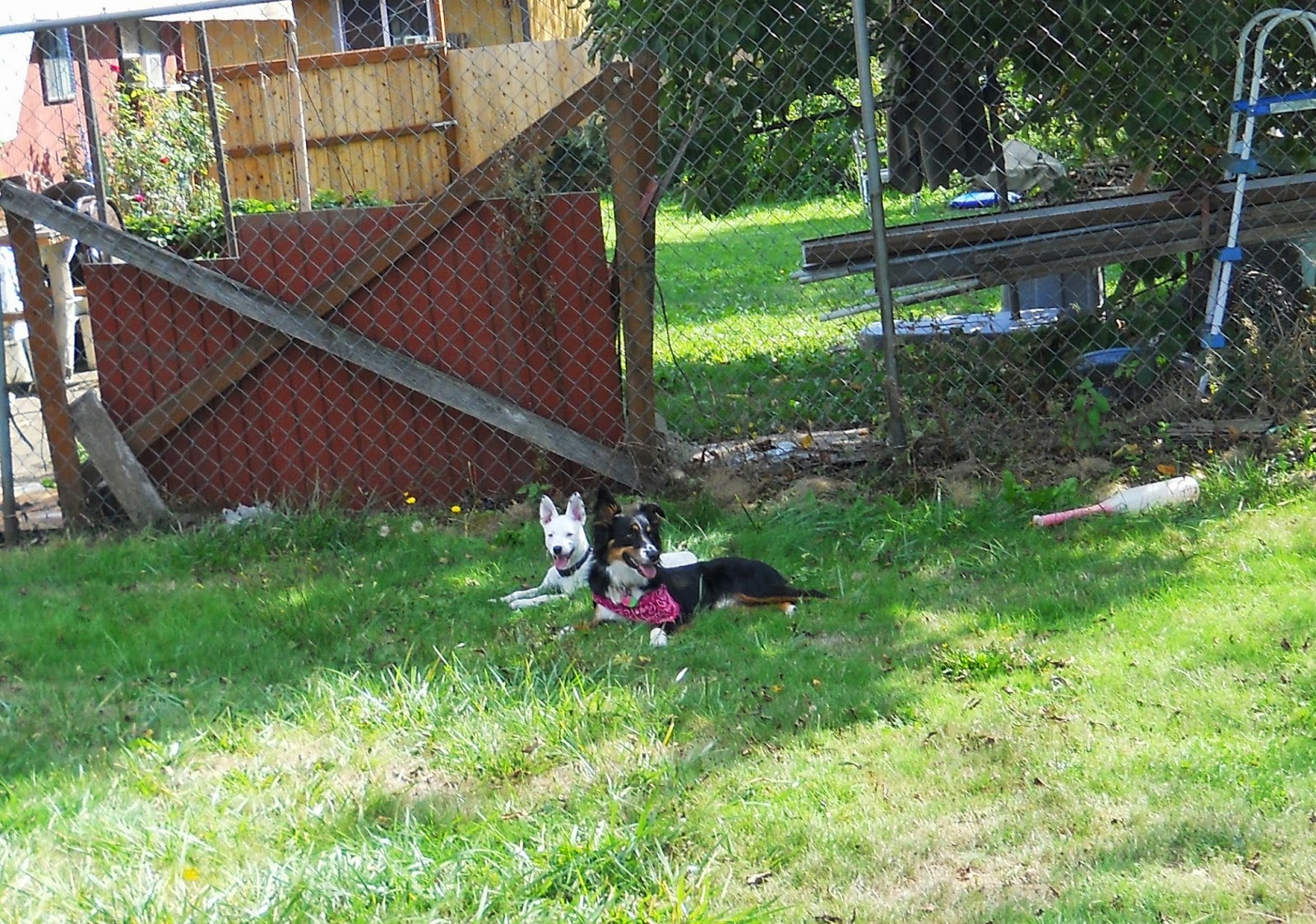
Here are pictures from other Doggy Play Days, and times Roxy got to play to her hearts content...