Wednesday, February 8, 2017

What's New?

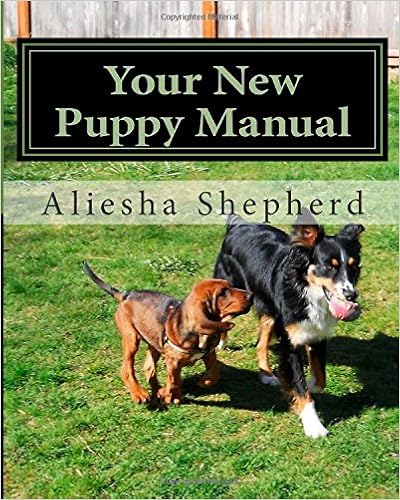
So maybe you've notice things got a bit quite over here for a while....well that's because I was busy making it easier for you to find the answers to all your questions in one place that you can pull off your shelf any time.  Yep, that's right, a book.  This pretty much covers most of what I go over in all of my basic classes.  I am also pretty proud of the fact that I took all of the pictures featured in there as well.  So learn something new, or refresh your memory!

Currently on Amazon.com!
Your New Puppy Manual


I would love to hear your reviews about the book once you have read it, so please leave me comments below about what you think and how it has helped, or what further questions you have!

Thursday, March 26, 2015

Service Dogs: Questions Answered


This is Zoey. Zoey is a Service Dog.  She is being trained in a classroom here. What is the difference, you may be asking yourself, between Service Dogs, a Therapy Dog, or a Emotional Support Animal?

A Service Dog is a dog who has a specific job that it is trained to do to help it's person.  They are allowed everywhere their owner goes because at any given time they may need to be present to do their job.  They must "do" something, whether it be licking their owner, jumping on them, or it could be as small as preventing a child from running away. Some guide their owner acting as their eyes, or their ears.  A service dog's job is much more than what then their task is.  They have to be well behaved, they have to pay close attention to their owner's body chemistry and body language.  They are very brave when they don't want to be, they must put their person ahead of themselves at all times.  However, they are dogs, they are not perfect.  Sometimes diabetic service dogs will alert to other people that are not their owners, they may jump on them, or lick them.  This attention may be unwanted, or simply being a dog they may act as a dog.  Service dogs love people, most of the time they are breeds who love children.  Other people and children can thus become a big distraction to them doing their job.

A Service dog can be any breed of dog, even one you are not used to seeing as a service dog.  They can be large Great Danes, Pit Bulls, or even small dogs such as a Papillon.  They do not need to be certified, or have come from a specific school. They do not need a vest, but when they wear one it makes it much easier to tell that they are working.  Please do not judge a Service Dog by what you think one should look like.  The larger dogs such as a Mastiff or a Dane a lot of times are used for those who have balance issues or muscular problems that they need help with.  They could also be used for those who get lost.  Others may be seizure or diabetic alert dogs.  Those can be any dog, they could have been a pet and started alerting on their own, or they may be specially trained dogs who were bought for this specific reason.  Either way they are service dogs, real service dogs.

Therapy dogs are again any breed of dog (or animal for that matter).  They are specifically trained to be well behaved and give love and support to those who need it.  Normally this is done at a hospital, school, or nursing home. They are certified and trained, most of the time their training is done through a program such as Pet Partners.

This was my dog Pippin about 10 years ago.  He was a certified Therapy dog.  He was wonderful with people and knew who needed him.  I could not bring him into stores with me, I also had to certify him, get him an official badge, and follow specific protocol.
I know people who have horses, chickens, ferrets, rabbits, or even cats who go to hospitals and nursing homes to give therapy to people.


An Emotional Support Animal is, in general, a person's pet who was acquired for a person who has anxiety or other emotional problems. They do perform a kind of service, they don't however fall under the service dog umbrella, unfortunately. They are not required to be trained other than to be a well behaved dog. The exception to this rule would be a PTSD dogs. 

Every state has their own quips and qualms and differences in the little things, such as in Oregon Service dogs in training are allowed the same rights and privileges as a fully trained one.  That makes training them much easier.  However not all states have that in law. So it's your responsibility to check and learn for yourself what the laws in your states are.  

A few things as far as the public's responsibility goes with these dogs.  If someone tells you that their dog is one of the above listed, understand that you may need to change your behavior.  You may need to refrain from petting the dog, move around the dog (give them space), or refrain from judging. You are not allowed to ask what issues the person has, only what specific jobs the dog is to do.  Seeing a service dog working out and about does not mean that they stop being dogs.  It does mean that the person who is attached to the other end of the leash might need a bit of space, and or understanding.  Someone who has a service dog has a need of it to help them with their living of their life, just as a person who has a wheelchair.  Follow the rule of "If you wouldn't say it or do it to someone in a wheelchair, don't say or do it to someone with a Service Dog."
 Remember, their needs are just as valid.
Please let's be compassionate to one another.


Monday, February 2, 2015

Starting off right!

One might be asking what has Aliesha from Sit Spot Click been doing lately?  Well for starters I am full time training a service dog named Zoey.  She is helping a boy who suffers from extreme anxiety and has some delayed mental developments.  So far she has been wonderful, but she still has a lot to learn.  Because she is learning that going all kinds of places is fun, if you see me out and about feel free to ask to pet her.  She loves people, and that will currently serve as a reward for her good behavior as well as act as something for her to look forward to.  Here she is learning how to sleep through church.
Meanwhile, my classes with CPRD (Chehalem Park and Rec. Dept.) are still going strong.  I have loved getting to meet all of you that I have though there! Looking forward to a great year this year with many more people and their dogs that I will get to meet!

 Here is my latest grad from the CPRD classes.... his name is Tank!

 Isn't he a sweetheart!
 I have also started walking dogs for people...This is Atlas, and this is the deer that we ran into in the Canyon at GF.  He was so good and simply watched as I did, no barking at this deer!
 Roxy apparently has a thing with playing Pokemon cards with the kids....
 I am also still doing private lessons, here is Story... isn't he such a handsome fellow! He was so fun to work with!

Looking forward to a great, fur filled year!

Saturday, December 20, 2014

Our gift to our furry friends


So I am in the process of training a Golden Retriever to be a service dog for a 15 year old boy I know. I am so grateful to be given this wonderful opportunity to give the puppy the wonderful gift of a job, and for the wonderful boy, this wonderful companion who will hereafter be a wonderful help to him.  I stumbled across this poem while looking up things about service dogs and I felt I had to share, I want to make this my theme.  Enjoy.

"Treat me kindly, my beloved friend, for no heart in all the world is more grateful for kindness than the loving heart of me.
Do not break my spirit with a stick, for though I might lick your hand between blows, your patience and understanding will more quickly teach me the things you would have me learn.
Speak to me often, for your voice is the world’s sweetest music, as you must know by the fierce wagging of my tail when the sound of your footstep falls upon my waiting ear.
Please take  me inside when it is cold and wet, for I am a domesticated animal, no longer accustomed to bitter elements. I ask no greater glory than the privilege of sitting at your feet beside the hearth.
Keep my pan filled with fresh water, for I cannot tell you when I suffer thirst.
Feed me clean food that I might stay well, to romp and play and do your bidding, to walk by your side and stand ready, willing and able to protect you with my life, should your life be in danger.
And, my friend, when I am very old, and I no longer enjoy good health, hearing and sight, do not make heroic efforts to keep me going. I am not having any fun.
Please see that my trusting life is taken gently so I may leave this Earth knowing with the last breath I draw that my fate was always safest in your hands."
Our thanks to the Author — Beth Norman Harris
- See more at: http://www.rileysplace.org/dogblog/a-dogs-plea/#sthash.twTK379r.dpuf

Thursday, September 25, 2014

Best Trainer in Newberg!

I want to give a shout out to you all who voted for me as the best trainer in Newberg for the year 2014!  This was quite a wonderful surprise!  Every year Newberg has a form you can submit where you name your favorite and best places and people for the year.  I am honored to be included for this year!
Thank You from Aliesha and Roxy!

Tuesday, July 8, 2014

How to create aggression in dogs

Let me give you the perfect recipe for making a frustrated and or, an aggressive dog.

Step 1. Let them see or hear something that excites them.

Step 2. Deny them access to that very thing that excited them

Step 3. Repeat

This could be a dog on another side of the fence, the mail man who comes to the house and then leaves before your dog gets his chance to meet him. When you are out on a walk and your dog sees something it wants across the street, or on the other side of the sidewalk.

Now you are probably saying, yeah so what I am supposed to do, give in all the time?  No, that would simply create a wild, and uncontrolled dog.  So what are you suppose to do?  If you can simply get your dogs attention redirected back at you, yawn if you can and blink slowly as you turn your head to one side (that is a calming signal that your dog will understand as they do it themselves).  If you can get your dog to refocus on something else, such as your voice, or a toy they will be able calm themselves down.  Then you can do one of two things. Once they are calm you can allow them to meet the stranger at the door, or smell that interesting patch of grass.  If you are on a walk and the other dog or thing of interest is not approachable, keep their attention, and focus on you.  If you know your dog tends to get overly excited easily, I suggest taking a tug toy with you on your walk, or how about a clicker and some treats.  You want to teach them self control in a positive happy manner.  The less fear involved the better.  Aggression is just the next step after fear.

Another way to create an aggressive dog down the road is to get a quiet, shy dog and then don't expose him to anything outside of your house.  You don't actually need a shy dog for this to work, any dog will do.  Puppies form most of the way they will look at life in those first few weeks after you bring him home.  So if all he ever learns is contained inside your house, any time you take him out of that house will be very unsettling at the least to extremely nerve wracking.

Ok, so lets say you already have a dog who is either acting extremely shy or fearful, or worse has hit that aggressive stage.  What now?  Can your dog be "fixed?"  In most cases yes.  It is simply a matter of reteaching your dog to be happy and confident.  Now you don't teach happy confident with shock collars, or choke chains.  You teach it by showing your dog good things happen when then are in those situations that they currently set them off.

For example, if your dog barks like crazy when the mailman comes, you will need to watch for the mail truck, as soon as you see or hear it call your dog to you and start asking for things like sit and down.  You may need to have your dog on a leash.  As long as your dog is listening to you, and not paying attention to the mail truck, or the mail man (you may need to do this where your dog can't see the mail man at first) then you can be giving clicks and rewards for his happy behavior.  If your dog looses his cool at some point in this exercise simply take him to his crate for a bit of a time out so he can cool back down.  This shouldn't be more than 5-10 minutes.   Soon you will have replaced the scary and seemingly unpredictable with fun bonding times with you.  Then you can move on to games where your dog can see the mailman and as long as there isn't any bad behavior you can click and reward.  Soon that once scary mailman will become a wonderful thing for your dog.  Once your dog no longer fears that situation phase any treats you have been using and simply praise your dog for handling himself so well.

In order to change your dog's reaction to the world, you will need to change the way the your dog sees the world.  If everywhere he goes he is getting goodies and having positive experiences, he will soon loose his fear of those things.

Note, the best time and way to not get an aggressive dog is to introduce him to as many positive and controlled situations as you can, in and outside your home when he is a puppy under the age of 4 months.  Studies have been showing that as long as your pup has had two rounds of vaccines, their immunity to those viruses are good enough not to worry as much.  In fact most tested immune to the viruses long after the 3rd or 4th rounds were supposed to have been given.  So do you and your pup a favor.  For the long run take the pup out with you to as many new places as possible in those first few months.  Not for too long, or they might get over stimulated, but enough to let them experience the world and find it a fun and happy place.

Wednesday, May 28, 2014

The Pinch Collar

We've all seen them, they are said to work wonders for the "tough" dog, and when your dog wears it even if he isn't that tough, it makes him look that much more mean or scary.


Lets take a look at if they work, or if they are worth using.  They are designed to cause direct pressure on the neck, causing the dog to refocus on you and ignoring any other urge it may have.

Do they work?  In short yes, they do.  I know a lot of people who use them and who swear that they are the only way they can walk their dog.

Do I recommend them? NO.  Why would I not recommend something that works?   Because of a host of other issues that can arise from using them and because you have not changed your dogs behavior, you have simply put a preventative in place.  In the long run you have a high chance of more negativity stemming from the use of such collars. 

With just as many people I know who use them and have them work for them and their dog, I have just as many with whom they don't work that well, if at all, or they become less and less effective the longer they are used.

Think back to a time when you have been caught up in the moment.  It could have been when you were watching a sports game, the score was close and the action was fast paced.  What if someone had come up to you and poked you with a needle?   Let me tell you, if you even noticed it you wouldn't have thought it was more than a tiny prick, maybe someone had bumped into you.  You wouldn't have given it a second thought.  Why is that?  Because what had your attention was where your focus was and you were so focused on it that your brain could register that something had happened, but that little message gets lost when you are intensely focused on something else.

Your dog will be the same way when he sees something that excites him and he pulls with that Pinch Collar on.  You might be thinking, man, doesn't that hurt? Or if it hurt him he would stop. Wrong.  His brain is trying to tell him to stop, but your dog us currently caught up in the moment of something and the adrenalin is blocking secondary pain signals.  You could even be causing some real damage and your dog would still act like nothing was wrong because whatever it is that has their attentions is being given the higher value at the moment.  That does not mean that he will not feel it, after the fact.

So if your dog likes to pull because you let him (intentionally or not) then he is going to pull.  Dogs pull because it gets them to what they want faster than if they walked by your side because, whether you did it on purpose or not, you ( or whoever had the dog before you) have trained the dog that when it pulls he gets his way.  So if that is the reason your dog pulls and you suddenly make it uncomfortable for him when he does pull, then the pulling will stop when it is uncomfortable.  The problem is that being uncomfortable relies on our brain to be our safety.  Only when we become caught up in something extremely arousing to us, such as that sports game, our brain's little safety nudges get put on the back burner till our adrenalin comes down and those little messages our brain is sending to us can get through.  That's one of the things that can happen when you use those pinch collars.  If you have a dog who needs to work on self control, or one who gets emotionally aroused to easily, your pinch collar is going to be as useless as a fly swatter.
The other, and probably more common problem with using a Prong Collar, is that you are still teaching your dog, but what exactly are you teaching it?

You see how the dogs like to lean in to sniff each other (why they do that is a whole other post), but when they have a pinch collar on and they do that, they get pinched.  Now you might be allowing them so meet another dog, but unless you are really good with juggling that leash as the dogs do their meet and greet dance, your dog is going to be pinched at least once.  So what does that start to teach your dog?  It teaches him that, when I meet a dog I will feel pain and be uncomfortable.  That uncomfortable feeling and emotion will then be picked up by the other dog I am meeting and he might get defensive, or at least a bit more standoffish.  You have just set up a great way to teach your dog, and possibly the dog it just met, that meeting other dogs on leash is not fun. If that is not changed, your dog will learn that seeing other dogs has the possibility of bringing pain and tension.  Thus, wala, you have just created a leash aggressive dog. If this pattern continues, your dog might start to become aggressive with all dogs in general, especially if he lacks a good social past and present with other dogs. (i.e. if your dogs only sees other dogs when on leash and doesn't have a lot of other doggy friends to play with, he will learn that when he sees a dog that pain will follow).

This is why it is so important to teach and train your dog to heel, or walk on a loose leash the positive way.  If your dog learns that the only way it gets to those fun places and the interesting smells, the only way it gets to meet that other dog, or the person is by walking by your side on a loose leash, then that is exactly what it will do.  It will take longer than simply throwing a Pinch collar on your dog, but really those Pinch collars are only teaching your dog fear and pain. When that is all the information your dog revives, that is the only information he will know to send out.  


I use a special harness method, when on leash, to deter pulling. While at the same time rewarding your dog for walking with you when there is no pulling.  I believe in teaching your dog good manners, rather than trying to intimidate them.  There are many ways to teach your dog good manners.  Even if all you do is stop walking when your dog pulls (every time) he will learn very quickly that the fastest way to get where he is wanting to go, is to do it at your pace.  If your dog is a bit older and has already learned that pulling gets him places, you will have to work longer to teach him that the game has now permanently changed. I love teaching the "heel" off leash, but don't forget that you need to put the leash on sometimes too, so they understand that it's the same when the leash is on or off.  Then you will have a well behaved dog who does not learn that fear or pain come from doing the things they love.


Sunday, May 18, 2014

New Training Options!!!

You all know the saying about dogs and learning new tricks....
Well I am learning new ones too!

It has come to my attention that there are still needs from you all out there that I am not meeting by simply holding classes.  I would like to change that. I am still offering the classes that I have in the past, I am simply adding to them!
I am now offering the ability for you to have me train your dog for you!
I know your lives are busy, I know you love your dog(s), and I also know that sometimes an experienced hand is the best one.  

Call me and we will arrange a time for you to drop your dog off daily, and I will spend an hour training your dog 5 days a week.  Feel free to run your errand, or take a well deserved break.  I will hold these sessions for 3 weeks, then at the end of the last week we will decide on a time where I can teach you and your dog together.

The first day I will explain what it is your dog will be learning and we will have what I call a "warm up session" where you and your dog will spend that hour getting to know me and the area that I will be training in. After that you will simply be dropping your dog off for me to work with.  I will send home simple instructions to help you and your dog continue with his better behavior at home. The last couple of classes I will spend with you and your dog, teaching you how to work together and make the training last.

The pricing will be $200.00 for 3 weeks of personal training, or if you feel that your dog will need more I will offer 4 weeks for $250.00


 I am located in Newberg for this pricing.  I am getting together a similar package for the McMinnville area, so stay tuned!


Monday, April 28, 2014

What have we been up to the past couple months?

Well they say a picture is worth a thousand words!
 Training puppies, and dogs alike!
At The Pets Stop Inn...

and at home!


 The cutest little Bloodhound puppy you have ever seen!
As well as teaching dogs and their owners through the CPRD community school


 Both Obedience and Agility classes


and chillin with the cats at home :)

Monday, February 10, 2014

New puppy 101 part 2: What is He Thinking?


What does your puppy think about?  Well we all know that dogs are smart, right?  Well what would do if you had 18 plus hours of being able to do nothing other than observe those around you.  If you had all the time in the world to figure out how to get something you want, which is most often food, or play, or to check out that new smell.

Puppies develop in stages, and each new stage brings with it it's own new set of challenges.
The "new home" stage is where you pick up your puppy and take it away from everything that has ever been familiar to it.  It may sound rather traumatic, and can be for quiet a few puppies, but most adjust fairly well, because of the exploratory stage they are in (or just coming into).  When you first bring that cute furry bundle home, try to keep things quiet.  Most puppies are still mommy clingers at this point, and not having their mommy to cling to, they will look for something warm, and quiet.  


Most pups are about 8 weeks old at this age.  They are just starting to venture out and explore the world.  At this stage the most important thing for their long term development is leaning that new things are not scary.  Wear hats, glasses, scarves, have them meet with calm children, and lots of men and make sure they get lots of good things (i.e. treats) to help them learn that these things can bring great things, no possible bad thing will happen just because that guy has a hat on. 
 These seem to be the biggest challenges that most dogs have as they get older.  Between the ages of 6 to 12 weeks your goal should be to expose them to at least 100 new POSITIVE things.  The big key here, in case you missed that, is positive!  If they have a run in with a kid who pulls their whiskers, or tail, I would not consider that positive.  Take them to a park where you know there will be lots of kids and have those who want to pet the puppy line up or sit quietly on the grass as you bring the puppy to them.  
This is also the age where you will be needing to get them their shots (and keep up on them).  That means a trip to the vet.  After your initial visit, take your pup back and let him explore during a quiet time (lunch time is probably a good time to shoot for).  Give lots of treats and belly rubs to show that the vet is not always a bad place.  Continue that as often as you can, and you won't have your dog hiding from you every vet appointment.  What this teaches is that yeah, sometimes crappy things happen there, but not always.  

As your puppy continues to grow and get older, they will want to start exploring more and more out of your range.  Between weeks 12 and 14 most puppies begin what I call "selective hearing."  They may have been heeling perfectly up till that point as well as running to you the second you called them, but now things start to be a bit different.  Now they enter into a phase similar to your pre-teen phase in us humans.  I have had many people tell me how much they love how well behaved their dog is, to a week later coming to me in tears wondering what went wrong, and is there a way to fix it!  Trust me, this is normal puppy behavior.  Just like your kids push and test your rules and limits, now that your new pup has learned them, they will begin to push and test too.  This is where you will make or break your relationship.  Yes you can always fix thing later, but if you want your dog to believe you when you say something, this is where being consistent pays off in the long run.

If you say "Sally, here Sally!" and Sally turns tail and runs, have no fear, simply turn and run the other direction while calling her name.  For most pups this presents an irresistible game of tag/chase.  90% of the pups will turn around and chase you.  Let them catch you, when they do, make sure you treat them or praise the heck out of them at the very least.  Never scold your dog for coming to you.  Especially at this age, you do not want them thinking that coming to you is ever a bad thing.  When they weigh the options of coming to you in their head, you don't want any negative times tipping the scales on the "keep going" part.
Remember your pup has a lot of time on his paws to simply sit back and observe.  They learn your routine, they learn your body language, and they learn how to manipulate it.  Now they don't do this so they are the "dominate" ones in the "pack," not every dog has the leader type personality.  They do this because this is what all creatures do.  If you want something you learn how to get it.  If your pup learns that you cave in all the time to his demands, he is going to get very bossy very fast.  Even shy laid back pups learn that if all they have to do is demand something and they get it, they will.  This is where leash pulling comes into play.

This is Bella, she is about 12 weeks old.   Do you notice anything?  Do you see how big she is?  Guess what, at this age if she pulls she is going to get where she wants to go.  The only reason a dog pulls when being walked is because it accomplishes it's goal.  In other words, your dog pulls because she can.

The best way to prevent pulling, and one of the ways to teach your dog that you are not a push over, it what I call the "hour block walk."  That means I take my dog for a walk, but I only plan on making it up and down the street, or around the block in anywhere from a half an hour to an hour.  Why in the world would I do that you might ask?  Because I stop and call my dog back to me every time she pulls.  Every.  Single. Time.  And guess what?  Your dog gets just as tired of it as you do.  The next time you go for a walk and you start that up again, your dog will quickly learn not to pull.


Now if your dog already pulls, you will have to break that habit, so it may take you a week or so of the "hour block walks," but if you do this when they are small, they never learn that pulling gets them what they want, only walking next to you.  It sounds so simple, and really it is.  There may arise other issues you will have to deal with, such as a cat that darts in front of you as you are out walking, but it will help lay the foundation for that as well.
Now back to that all important issue of socialization.  I know a lot of you out there are going to hear  your vet tell you not to let your pup play with other dogs till the vaccination series is complete.  Well, unless you have a Boxer, Pit Bull, Doberman, or Rottweiler, (those breeds were found to be more susceptible to Parvo) I would wait only a couple of days after your first round of shots.  They will still have the antibodies from their mother's milk in their system to help protect them, and now you have just given those anti bodies a boost.  Socialization is just as important, if not more so almost, than those vaccines you have just given.  This is the age where their brain takes and processes as much information as possible.  Now is the time they are hardwirering things for their future lifetime.
Your pup needs to know the dog language in all it's forms, from big dogs to little dogs.  He needs to know that kids are not always scary, that wheel chairs and bikes are not scary.  The mail man or the UPS man will not bring evil to the house.  Hopefully you know some people around you who have dogs that you can take your puppy to meet.  Have your pup meet the mail man regularly and have him give your pup treats each time.  Go to a skate park and stay at a distance where your pup won't get hurt, but can see what is going on and give out lots of yummy treats while you are there.  Walk on a route that takes you past a school with kids coming out, and have your pup sit while the kids stream by on foot, bike or scooter.  Every time make sure your dog is getting treats and good treatment.  Then down the road if something scary does happen (whether or not you are aware it has happened) your dog will understand that it was more or less an isolated instance and not what to expect.  

When you do have play dates with other dogs try to make sure the other dog is friendly and wants to play.  If that dog has good social skills they will help in teaching the same to your pup.  This is really not something you can teach as well as another dog can.  If your pup bites too hard, the other dog will let him know.  The other dog should also let him know what types of attention getting play behavior is appropriate, and what is not.  Poorly socialized dogs are the ones who tend to use the "humping" method as a way to try and get another dog, or person, to play.  This type of play can be tolerated by some dogs for a bit, but if the other dog is tired and needs a break and your pup continues this behavior, the other dog will more likely to put a quick end to this.  If the other dog's message is not getting across this is where you may need to step in and take the pup away for a small time out.  Sometime a puppy will get over stimulated and have a hard time calming down.  To prevent problems simply move the dog away, yawn and look away.  You may need to leash  your pup or put him in a crate if he does not start to calm down after doing that.  This will help teach your pup calming signals and he will start to learn what happens if he pushes those limits.  Just as you would not allow your child to push the other children around at the playground, your pup sometimes needs help in learning not to do the same.

Remember, even though your puppy may not look like a puppy at 6 or 8 months old, he still is.  Don't expect your puppy to not be pushing some of those limits until he is at least well on his way to being 2 years old.  However the older they get, and if you are consistent with your rules the testing, and pushing will not happen often, or for very long when it does happen the older they get.  Most of the time once your dog reaches the 1 year mark they have learned enough to be considered an adult, albeit a young adult.  Think of your 1 year old dog as you would a 20-21 year old in human terms.  Sure they are adults now and know and understand the rules, but that will not stop them from occasionally testing them to see if they will hold up all the time.
Don't forget they do want to please you, it's just the laws of nature at work when they are young.  The stages they go through aren't much different than what took you 18 years to go through, just be glad they get theirs done within one year.  When in doubt love them and they will love you back.  Then get a good trainer to help you work out what you might not be able to.
  

Friday, January 31, 2014

New Puppy 101 Part 1: The Basics


 Puppies!!! Everyone loves puppies!!!! Right? The minute you see one, your heart melts and you start daydreaming of what it would be like to have one...until you remember the house breaking, the chewing, the biting, the training, the list goes on and on.  However if for some reason you don't remember all of those things, or you have never had a puppy of your own before...remember one thing, they are worth it, and you can get through this.

 At first you are like, "how can this cute little ball of fur be any trouble?" Right?
 Then you get them home, and they can't seem to understand that peeing outside in the wet, muddy grass (or if you don't live in the NW as I do, freezing, snow) is what they are supposed to naturally want to do. They seem to prefer to potty on your rug.  Next they start jumping, and at first it's cute, they are so short and it only seems natural that they should jump to get your attention.  Then a couple of months go by and your "little" one is now 30 pounds and is leaving large muddy paw prints all over your clothes when he does come in from pottying outside, and you either go to work now covered in paw prints, or you are late because you are always having to change clothes, and your laundry just keeps growing.....
 Well enough of the problems we and our new found best friends have, if you don't know them you soon will.  How do you fix the problems, or even better, (if you are smart and are researching all this before you bring home that new bundle of joy) how do you prevent such issues from occurring in the first place?
 First off, figure out what motivates your pup.  (and let me give you a little hint here, food will almost always, as in 99% of the time, work the best.  If the treat or food that you are using is not working try something new.  I like to use wet dog food, and I have found the Nutro brands which use chicken broth to be the best, Greenies Pill Pockets are also a huge success in the treat area)

Second.  Pick up a clicker before you leave that pet store.

If you want things to go as smoothly as possible with your new adopted family member, you need to make sure the communication between you two is as solid as it can be.

A clicker is there to help reduce miscommunications.  Sounds great right.  It is.  Lets say you are working on potty training, you take your pup outside, she potties on the grass (or wherever you want her to), you click the clicker as soon as she is finished, then she gets a treat (you know the ones that will motivate her).  The click is telling her what she is getting the treat for.  It's faster, and more accurate than a word is, and it also bypasses the frontal cortex of the brain to go straight to the amygdala to be processed.  In other words it just works better, and the information is retained longer. I also highly recommend using a crate or playpen to house your pup when you are not going to keep a direct eye on her.  Keeping a food and water schedule is also a great way of preventing those slippery accidents on the floor.  Put water out once an hour, then take her out to potty.  Offer food two or three times a day, then put it up out of reach.  You will soon learn how long your pup can go between meals and drinks.
 I know you really want to get that puppy as soon as possible, but let me tell you, you will be much happier in the long run, if you wait to get your pup till after it is at least 8 weeks old.  The longer they get to stay with their mom and other litter mates, the more they learn through them, and the less they have to try on you.  You don't speak dog as well as their mom does, so trust me, somethings mom is better off teaching.  Bite inhibition is one of those critical things that they learn from playing with their litter mates.  If they bite a litter mate too hard they get a squeal and the fun ends temporarily.  So they learn not to bite as hard, their little milk teeth are just as painful to each other as they are to you and I.  Let them learn on each other and not you,or your children.  If you do get a pup who is hell bent on seeing just how hard he can bite you, squeal just like his litter mates would have, stand up, end the fun by placing the pup in a crate for a minute or leaving the room.  Another thing to do is have a tug toy near by, if your puppy starts to try and bite your hand (as cute as it may be, don't allow it) offer the tug toy instead.  Show your pup that toys are for chewing and playing, not human body parts.

If ankle biting becomes an issue, play freeze tag with your dog and click when he does not go for the feet, or hands.  It helps if you be "a tree" as shown here.  I also ask for a sit as soon as I stop, then click and treat for the sit.


Walking.....Do Not allow your puppy to pull on a walk when you first get him!  The only reason a dog pulls is because he has learned that it gets him where he wants.  The leash is something all dogs have to learn, and the sooner they learn it the better off everyone is.  Start when they are small.  If you have a large breed, trust me, in a couple of months they will be bigger than you think.  Not that I have anything against having your dog off leash, it's just that they will need to be on leash at some point in their lives, and more likely than not, that will be most of the time they are out in public.  You don't have to drag your little friend all over the floor to teach him to walk with you either. Nor will you need to resort to pinch collars to keep your pup from dragging you down the block.  


To teach your pup that walking next to you on the leash, I use a treat on a spoon that I can hold down and then pick back up out of their reach.  So when I click I hold the spoon down, let him take a lick or two, them walk a few steps, and if your pup stays with you click and let him have a lick.  You can use big wooden or plastic spoons, or these little baby food spoons.  Once your pup seems to have the right idea you can try to put more steps in between each click.  You will be the marvel of all your friends who have dogs when they see how well yours is walking on leash.

Here are a few tips to remember:
 Puppies keep those sharp daggers till they are about four months old, then they fall out and they grow new ones.  At that time they start to chew on whatever feels good on their gums.  If I were you, I would invest in several different dog toys that are different textures to see what it is your puppy likes.  They will teeth on and off till they are about 11 months old.  They start growing in molars after they replace their milk teeth.

Don't chase your puppy if he runs off with your favorite shoe, skirt, or toy, etc.  Puppies LOVE the game chase, once they learn how to get you to play with them, they will use it as often as they can get away with using it.  It's better to teach your puppy the cue for "drop it" and Leave it" then calmly walk up and retrieve the item.   You can use this chase game to your advantage though, if your pup escapes the house or yard and will not come back.  Run in the opposite direction calling your puppy's name, he will think you are playing chase, and most often will follow you.


 Do Not try and tug an item from your puppies mouth unless it is a tug toy.  Once again, puppies love to play tug, and if they think they know how to get you to play their game, they will do it all the time. Tug is a wonderful bonding game that you can play with your puppy it will not make them think that they are top dog if they win.  If you have ever watched dogs playing tug you will see that polite dogs both win and lose, the one you may perceive as "dominant" does not always win.  Unless he has very bad doggy manners. So feel free to play tug with your pup using whatever clothy like substance you deem worthy (socks, rope toys, toy animals)