Saturday, January 11, 2014

Inside Your Dog's Head: Why the clicker works

Ever wonder why, when you click that little button on a clicker, your dog lights up like it's Christmas time?

  Lets put it this way, why do you like facebook?  How easy is it to write your woes as a facebook status versus telling them personally to all your friends or acquaintances.  The lack of emotional response can be quite freeing.  That's why it's so easy to say the wrong thing or take things the wrong way.  Lack of ability to convey emotion.  Now what if you were only able to get positive feedback and happy, good feelings from everything you saw and read on Facebook?  The fact that your computer screen can not give you any real emotional feedback makes it a perfect way to show how your dog sees the clicker.  The clicker is just like your computer screen, only you can give it any ties to emotion.  When you pair the clicker with yummy treats and good times from you, you suddenly have that magic happy feeling button.  It never means scary, or bad or grumpy growls.    If you use it often enough your dog will begin to see you in more of the same way.  If you use it (paired with yummy treats, or a fun toy) around places or things they find scary, your dog will quickly learn to associate more happy, positive feelings with those that were once scary.

Pretty simple. Yet very powerful.

 Not taking wet food from a spoon until clicked,
 not jumping all over you when they are very excited to see you,
Doing what you asked, when you asked it.

All thanks to the power of that little clicker in a box.

Thursday, January 2, 2014

Out with the Old and In with the New!

At this time of the year we are busy setting new goals for ourselves, have you stopped to think about setting some for your 4 legged companion?   It's really very similar to teach them to stop doing that really annoying thing, such as jumping all over you nice work suit as you get ready to walk out that door.  So how do you do it?  Well I just finished reading an article on how to succeed in your own personal goals and I was surprised at how much is exactly the same for dogs as it is people (in fact I had to double check I wasn't reading about dog training).

First off everything we do has a cue.  All our habits can be trace back to some sort of a trigger.  The same is true of your dog.  Why is it you are always craving that dessert after dinner?  Is it because that was what your family always did, so you do it too?  Why do we eat comfort food when we are upset?  Because it triggers good feelings and memories.  It literally makes us feel better. 

 Your dogs are no different.  What triggers your dog to jump on you?  Watch closely, notice the patterns that set life up.  A lot of times you dog knows when they hear the sound of your car, it makes it's own unique sound on the road.   When they hear that they get excited.  When a dog is happy to see someone instinct tells them to lick the lips or mouth of the one they are happy to see, just like we  give someone we love a hug.  The only problem is that our mouths are so far away.  So they jump.  When you are getting ready to leave you probably go through a routine, you dog notices that, and so starts to go through their own.  

If your dog is feeling lonely or bored and wants to play, but you are glued to the t.v. set, what's a dog to do?  Well they always get you up on your feet when they pick up an item that is either forbidden (your understanding, not theirs ), or if they pick up some new, novel thing.  Then they get you to play that beloved game of chase.  Even if it ends with them getting into trouble, they think it's worth it.

So how do you fix that?


This is where you get to choose new cues, what they are to mean, and when they will be implemented.  Lets take the issue of chewing on things he shouldn't.  You will need to teach the "drop it" cue and the "leave it" cue.  Then work on the "come" and the "fetch." Here's how it would go.  Take a tug toy and start playing.  Grab a yummy smelling treat and hold it right up to his nose.  He will drop the toy to open his mouth in order to eat the treat.  Right there is where you would click and then let him have the treat. The click tells him what he just did is correct, and that is what he is getting the treat for.  Then you repeat.  Play tug, say "drop it" while holding the treat up to his nose, then click and treat as soon as he drops the toy.
Next work on the "leave it" cue.  Hold a treat in your hand and tell your dog to leave it.  He will most likely try to get it.  It is most important that he does not.  Close your hand around the treat and if you need to pull it in close to you (not above you which will induce jumping).  As soon as he settles back down away from the treat, click and he can have it. Slowly try to get the treat down between his paws, this might take some time.  Don't go any faster than  he can resist.  You want to set him up to succeed, not fail or he will get frustrated and not like to play this game anymore.


So now you have your dog dropping things  and leaving them where they were dropped for you to come retrieve.  Now call your dog to you for a nice pet, or a treat.  That will then reinforce the come.

 Now to teach your dog to play fetch, so that when you are tired, your dog can still play with you without getting into trouble.  See how we are replacing the triggered behavior?
Here is a short clip of how to teach your dog to play fetch.  Note that your dog will take a bit more time, as Roxy knows how to fetch, she is simply being taught to fetch an item she does not normally fetch.  The teaching method is the same though.


So remember if your dog is needing some help with his New Years goals this year, you now have the know how to help him.  Don't just try to stop bad behavior, replace it with something you want your dog to do instead! 
Here's to a Happy New Year!


Friday, December 6, 2013

Punishment vs Positive

I know how tempting it can be.  Trust me.  We have all been there.  At the end of our ropes or leashes as it may be.  Most of the time it's with a puppy, though yours may be full size and not looking so puppyish anymore, (under the age of 2 all dogs should be considered either a puppy or the teenage/young adult version.)

You wouldn't think twice about stopping someone jerking their child around on a choke chair or worse using a shock collar on them, why is it any different with your dog?  We get extremely upset with our own children and they speak our language.  Even spanking your child now a days is seen as a last resort instead of the first step as it was 20-30 years ago. (which I think shows a lot of progress on our part).


How is it rational for someone to adopt a new addition to the family, then proceed to choke, shock, or use other implements of fear and intimidation to teach them our language.  Really the more I think about it the more absurd it sounds.  You would be calling the cops and reporting child abuse if you saw such a thing.  Well how is that any different when you treat your dog the same way?  They don't speak our language, yet they try to please us even when we use pain to stop their natural behaviors.  The sad thing is that we don't bother to learn any of their language, we expect them to learn ours and simply follow our lead.  How many of you knows what it means when your dog looks away from your face when you are staring at them? Or when they yawn or blink slowly?  Really it's simple, yet there are only a handful of people who bother to try and understand what their dogs are saying to them.  Instead of trying to work with their dogs as you would anyone else who didn't understand your culture or language, we submit them to a barrage of intimidating treatment.  
Even if your dog doesn't seem to be phased by the constant choking or tugging on the leash it still is affecting them. Dogs don't live in a static bubble.  They are either moving forward, loving the interaction you have with them or their environment, or they are learning that every time you interact with them, you could turn into a pain inflicting irrational person.  What is normal and expected in the dog world, does not always mesh with our own view of the world.  It still surprises me when I hear people thinking that rubbing their dog's nose in their poop or pee puddles will teach them not to do it again.  How quickly we forget that they don't understand what we are trying to tell them unless we take the time to teach them.  If you rub their nose in something unpleasant they will learn to fear you, not respect you.  They will still try to please you in other ways, they will just have learned that you are unpredictable and if they think you might fly off the handle they will simply hide from you.  Having your dog afraid of you does not make them behave any better for your sake, only to keep from being abused again.
  Having watched dogs from all different backgrounds that need help with behavior I can see the dogs who have been trained using harsh methods.  They tend to not listen or want to pay attention closely to their owners. They don't have any real good reason to, if they are not wearing their training devices they know they are out of your reach and so you have not really fixed the bad behavior, you have only taught them to respond to you when you are in control of their punishment devices.

The goal with positive training is to teach your dog the good behaviors you want them to offer you.

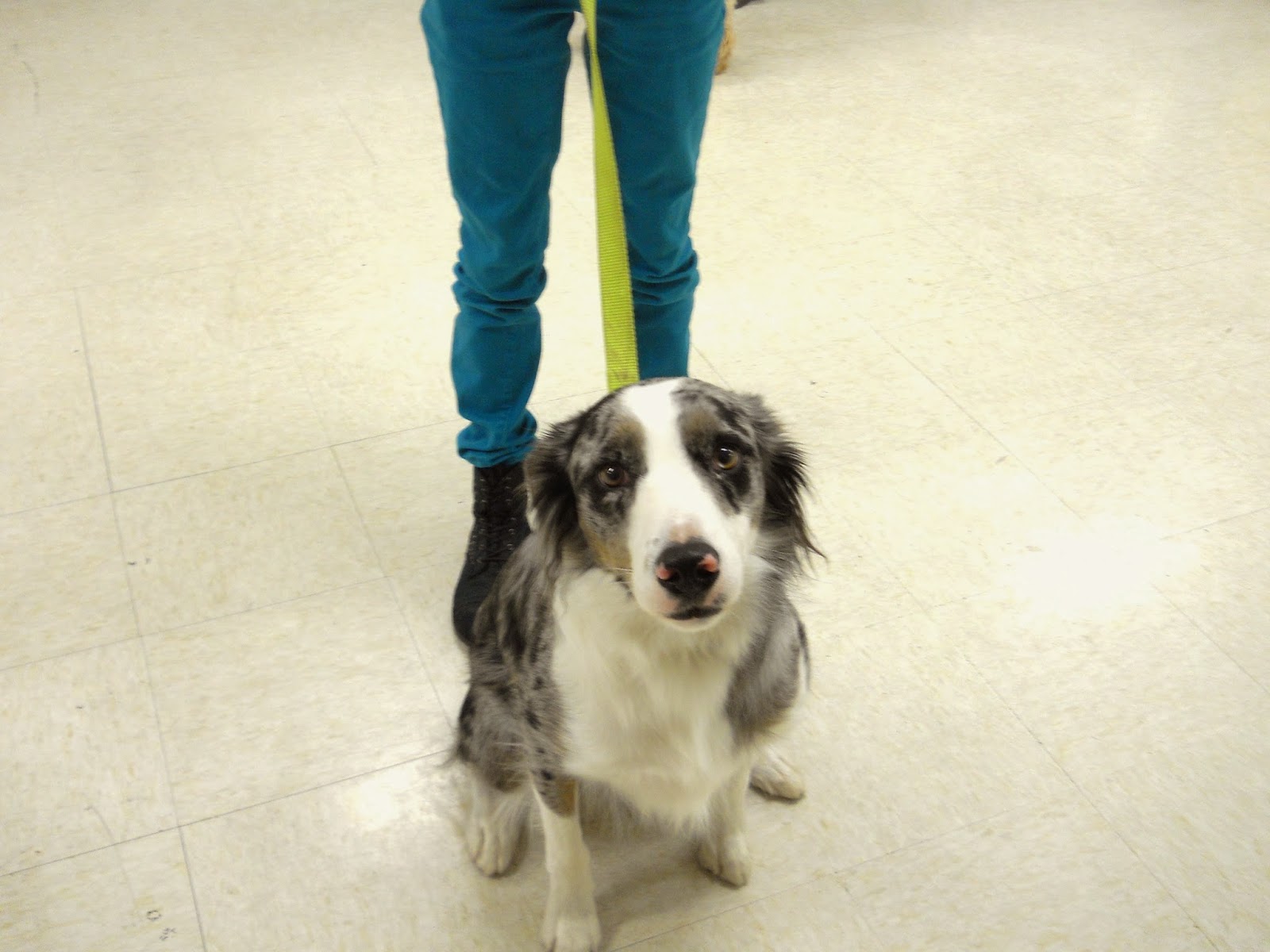
Does this look like the face of a dog who is scared of listening to you?  Just like people, puppies go through stages and phases as they grow.  You might have a perfectly trained dog at 12 weeks of age.  Then at week 18 your dog is not listening to anything you say.  Makes you want to pull your hair out doesn't it.  It's because just like us when we were younger, they test the limits of the rules periodically.   This is what I mean when I say, until they are 2 don't expect 100% from your dog at all times.  Just like raising kids it's not over with 6 weeks of successful training.  There are the terrible twos, the    pre-teen, the teenage stage, and then they become an "adult" and they still make stupid mistakes or don't always get things right the first time.  When you adopt a new furry member of your family please remember and keep that in mind when you step in that cold puddle on the floor for the 5th time in a week. (and if you are doing that there are a few things you should and should not be doing such as a food and water schedule and using a crate or play pen when you can't keep an eye on your puppy or dog).
 Would you really think of putting a shock collar on this sweet face?
The problem is they don't keep these cute faces long enough to get through their childish phases but they still feel like this on the inside.  

Think carefully about the methods you choose to train your dog.  What does this say about you and the relationship you want with your dog?  This is for people who want control, but are afraid they can't have it.  The reason people use fear tactics in training is they themselves feel fear.  Fear based training gives you a false sense of control over any given situation.  What you are really doing though is setting the scene for a possible tragedy as the more anxiety your dog feels in situations the more likely you are to loose control in the future.  Not from a rebellion necessarily, but because fear eventually spills into aggression.  It's the next step on the negative emotion ladder. So in reality you are only just staving off the inevitable, you have created a ticking time bomb whether or not you can see it.
Pain free, positive reinforcement training does take time, and it does take patience, and it does take treats.  Time and effort though pay off big time when your dog will do what you ask simply because you have asked.  Not because you have forced or scared him to.  Your dog is happy to do what you have asked because it has always been worth it.  You now have a teacher student relationship,or parent child relationship with your newly adopted.  As the two of you continue down life's road you will find you have created the best of friends in your furry companion. Consistent, and one who seeks to live in harmony with you. In my book that is better than a ticking time bomb any day.  They may not always be perfect, but neither are we.  You will however have a true friend and companion, who sees the same in you that you do in him.
Happy training!


Monday, December 2, 2013

Redirecting, the "How To" and "Whys"

First things first.  Redirecting, what does it mean?  Simply put, it means to ask your dog to do something else in place of what it is doing.  Say you have a chronic jumper.  You may not mind it all of the time, but lets say you are in your nice work clothes, or your frail elderly neighbor is coming over to say hi. How do you get your dog to not jump on everyone, every time? (to understand why they jump on you click here) 
 The best way is to simply ask them to do something else every time they are going to want to jump.  Note, you need to ask them before they jump. Asking for a sit before they get to you is what usually works the best when it comes to jumping, just remember to praise, and pet for good behavior.  Your dogs is simply happy to see you and is asking for your attention, don't forget that negative attention is still attention, and if your dog is so anxious for it they will take the negative attention as reinforcement for their behavior.  My suggestion is to make your dog's default behavior a nice sit at your feet, then if you would like your dog to put it's paws on you, you can ask for it.

When it comes to the mounting behavior, which has very little to do with social climbing or dominance behavior, you will need to watch your dog and get to know the cues he or she displays before the mounting behavior commences. To see why they do this, and how to fix it read here.  To use a "redirection behavior" here, you will need to get your dog's attention and ask for a sit, or maybe play tug, then offer the other end of the tug toy to the other dog (if the other dog is social).  I also suggest some well timed yawns, as well as glancing away from your dog to help your him or her calm down. Those are calming signals that dogs use on themselves and those around them to help them calm down. If you use them the can also help them to calm down as well.

Another way of looking at redirecting is breaking an old habit, and replacing it with a new habit.  Don't forget the rule of thumb 30 days to break an old habit and 30 days to make a new one.  Now this doesn't mean that it is going to take two months, nor does it mean that it will take only one. Think of it instead as 30 to 60 training sessions.  Now your dog may catch on faster than that, but please remember to give your dog the benefit of the doubt and don't expect too much of him or her too fast.  The younger the dog the less "set in" the habits will be and they will generally be easier to change.  However, don't despair if you have an older dog with bad habits you want to change, they can be, it might just take a bit more patience on your part.
 Now to the why, why bother with all that work of redirecting when all you want is the behavior to stop.  Have you ever tried to break a habit that you had and wanted to get rid of, smoking, nail biting, eating too much junk food?  What helped the most?  Simply stopping cold turkey?  Did you use replacement behaviors, such as snapping a rubber band on your wrist, or eating something else that maybe wasn't quite as bad for you?  You are much more likely to be successful at changing your habits, as well as your dog's if you replace it with something else.  It's as simple as that.  Here's to you and your dog's new behaviors!


Wednesday, November 27, 2013

Happy Thanksgiving

My "I'm Grateful for" list...on a sort of wordless Wednesday...
I am grateful to live in such a beautiful area!....


 For my current and past dogs....and all the people who have allowed me to get to know their dogs, and help them in one way or another...


 For the places that allow me to train in their facilities such as The Pets Stop Inn,
 and the Chehalem Park and Rec.


The dogs themselves and their goofy antics!

For my wonderful family and the bond we have together!


Happy Thanksgiving from all of us here to all of you out there! Feel free to leave what you are thankful for in the comment section below! 


Thursday, November 21, 2013

What to Expect When Your Expecting, With A Dog

So what's cuter than a baby and a dog?  Not much really.  It's great when they get along just fine from the get go.  The problem is that is not always the case.  Especially if you had the dog first.


I have had this question a few times, and it always goes something like this: "We just had a new baby and the dog is acting like he/she wants to bite it, or is growling at it.  We are not sure what to do, can you help?"

Why do dogs not always seem to share our overwhelming joy in the new addition? I have to say, for many, many reasons.
First of all, a lot of the time your dog has had your undivided attention, and now he doesn't.

Second, babies make a lot of unexpected loud noises and disrupt everyday life, as they knew it.  You had at least 7 months to mentally prepare yourself (most of the time), and you still struggle with it.  Expecting your dog to take to it all without a hitch is like expecting you to welcome the burglar in your house to becoming a roommate.

Thirdly babies smell different, dogs don't see them as small humans, they see them as a strange alien animal they haven't seen before.  They move in jerky motions, and jerky stiff, motions to dogs mean that the animal giving the signals are feeling aggressive.

Given that information, put yourself in their shoes.  What would you do if an alien burglar decided to make himself at home in your house?  What if your spouse didn't seem to think there was anything wrong with it?  Would you feel the need to protect everyone in the house from it, or at least yourself?

Now, how to help your dog understand, or at least feel more comfortable with this new strange addition.  If you have yet to have your new bundle of joy arrive, find a place that you can bring your dog that you know has babies.  Maybe have a friend or relative come around with theirs.  As your dog comes around just for checking things out, click and treat.  The goal here is to make your dog think that these weird alien things are cool treat dispensers.

If you have already brought the new baby home and are dealing with the fall out, please keep the dog away from the baby at first.  Bring out some of the babies clothes or blanket that the baby has been wrapped up in. Click for investigating the clothes. Once you have the dog happily sitting when you bring out baby smelling items, then you can move on to bringing out the baby, wrapped up in a blanket that your dog is used to smelling.  At first you are going to want to stand while holding the baby out of reach, while having someone else click and treat your dog for good behavior while the baby is out.  You can gradually lower the baby as long as the dog remains happy and does not close his mouth or freeze.  If you see any of those behaviors please remove the baby or stand up so the dog becomes comfortable again.  It will take every dog their own pace at learning to accept a strange new member of the family.  Don't rush them.  Ever.  That will only be putting the baby in harms way.

Tips for toddlers.  Please don't allow your toddler to pull lips, poke eyes, or bounce on your dog.  While your dog may tolerate this behavior for the time being, you never know when the time will come that your dog will decide that it is done being tolerable.  Teach your children from an early age to treat the furry members of the family with respect.  Your dog may tolerate such behavior, but other dogs may not.  So when visiting other dogs that will only put your child at risk.

I love seeing well adjusted furry and non furry siblings playing together.  I just don't want to hear sad stories of families having to rehome, or worse, having to put their dog down because it bit the baby.  Remember there is more at stake here than just a little nip.  Lives really are on the line.

Monday, November 11, 2013

A Dog Whisperer

What does the term "Dog Whisperer" mean to you?  For me it used to mean someone who could understand the body language of dogs, specifically, someone who had some unattainable attribute that gave them Dr. Doolittle powers.  That's what I used to think, till I started having clients call me one.
 Now I am not simply trying to toot my own horn here.  At first I politely denied it, still thinking that was a title that was meant for someone else, not me.  But after seeing what other trainers were doing who called themselves a dog whisperer, I decided that I should stop declining the title I was being given, lest some of these people started to believe in the other "whisperer's" less effective, and dangerous methods.

Now let me tell you something else.  If I can be a "dog whisperer," so can you.  Most people say that and believe the same thing I did.  It's an unattainable trait that is only granted to a few special people, which they happen to not be.  That's where you are wrong.  All it takes, if you are really interested, is a detailed observation, knowledge, and more observation.

For me it all started years ago, way back when I was 17 or so.  I had a horse, and I read a book that changed my outlook on my relationship with animals.  Around that time was when the book, by Monty Roberts "The Man Who Listens to Horses," came out.  I was given that for Christmas, and I devoured that book in days.  I then raced up to the stalls to try out some of what Monty Roberts had described in his book.  This was my horse, Stacy.  I rode bareback most of the time, and I spent as much time as I possibly could up there for those few short years before life, and it's many twists and turns happened.  What I learned up there though has stuck with me all these years.  I learned that I could have a real relationship with animals, I learned that we could even communicate.  Horses are wonderful that way.  They are so sensitive to their rider's mind.  If I saw a log on one of the trails we would ride on, and I just stared at it, I learned that Stacy would spook, or at least take the long way around that log.  She was picking up on what I was concentrating on.  I could do that with anything, a rock, or a clump of grass.  She was a wonderful teacher.  So forgiving too.  It was here though, that I learned the art of observation.  I watched how the horses interacted with each other, I watched how they interacted with different people.  I watched how they interacted around me.  I discovered that if I took the time to learn why they acted a particular way, it paid off in the long run.


Animals who lack a large vocal language rely on their every movement to relay information to those around them.  An ear flick, a raised leg, even a lip movement are sentences to those who know understand.  We are so lucky to live in a day and age where our own communication can be relayed around the world in a blink of an eye!  It might take a bit of digging, but you can find others out there with years more experience at reading animal body language than you have.  Then comes the fun part.  This is where you need to do your own observation step again.  Apply what you have learned and from others and their research and observation, then see if it holds true in your situations and circumstances.  Most people who have done degrees, or spent years learning animal body language will not always agree on the exact meaning of all the twitches and movements of a particular animal.  So what's a person to do?  Now is where you take all that you have learned from your studying and apply it to as many situations as you can.  All the while, keep abreast of the latest studies that are constantly coming out.  It would never do to think you have learned it all and that was it.  Until we have a universal animal language guide book, we should never simply take someone at their word, if we can help it.  We need to experiment with it ourselves.  However if you have hit that point, you have made it.  You too will probably get people calling you an animal whisperer, whether or not you feel qualified to be called one.

Whether it be a dog, bird, horse or cat, we all can discover the "Animal Whisperer" inside all of us, all it takes is a closer look at the world around us.